Health guide: Natural product use 80% best tips
"The history of human health is often written in the language of plants and natural remedies used across generations."
The use of natural products has shifted from localized, community-based practices to a globalized framework of integrative health.
This transition involves moving from anecdotal wisdom to standardized applications, though the fundamental reliance on botanical resources remains a cornerstone of global health for many.
Key takeaways: * Global usage of traditional and integrative medicine remains significant, particularly in specific geographic regions. * Historical reliance on natural products often differs from modern clinical applications.
* Understanding the scale of usage helps contextualize the transition between old and new methods.
How do we understand natural product traditional use?
A researcher sits at a wooden desk, unfolding an old botanical sketch beside a modern microscope. This scene captures the tension between heritage and science as we examine how natural product traditional use has shaped human survival.
The scale of this practice is vast. According to a 2024 World Health Organization global survey, two-thirds of countries globally report at least 40% of their population uses traditional, complementary, or integrative medicine; reported usage is higher among African and Southeast Asian countries.
This widespread reliance demonstrates how deeply these practices are embedded in various cultures.
While some regions show high engagement, the methods used vary significantly. Integrating these historical roots into modern frameworks requires a careful look at how much of the population still relies on these methods for primary care.
What are the differences in herbal use past vs now?
In the quiet library, he holds a fragile petal in one hand and a cold glass vial in the other to contemplate the evolution of health.
In a quiet library, a student compares a hand-pressed dried leaf to a sterile vial of concentrated extract. This moment highlights the shift in herbal use past vs now, moving from whole-plant preparations to isolated compounds.

Historically, natural medicine old ways relied on the holistic application of plants in their raw or minimally processed forms. These methods were often tied to local ecology and passed down through oral traditions.
Modern science has refined these processes through pharmacognosy, which focuses on the study of medicinal drugs derived from natural sources. While the goal of relief remains the same, the precision of delivery has changed.
Plant remedies then and now are often distinguished by their standardization. Where an elder might have used a specific tea, a modern practitioner might use a standardized extract to ensure consistent dosage.
How does natural medicine old ways differ from modern applications?
A doctor reviews a patient's history, noting a mention of a traditional tonic used by the family for generations. This illustrates the bridge between natural medicine old ways and current clinical discussions.
The transition from traditional knowledge to modern science involves several shifts:
- Preparation: Moving from decoctions and infusions to standardized extracts. 2. Knowledge: Shifting from community-based oral tradition to documented pharmacological data. 3. Application: Moving from general wellness rituals to targeted therapeutic interventions.
A final check ensures that these modern applications respect the original botanical origins while meeting safety standards.
How do we bridge the gap between plant remedies then and now?
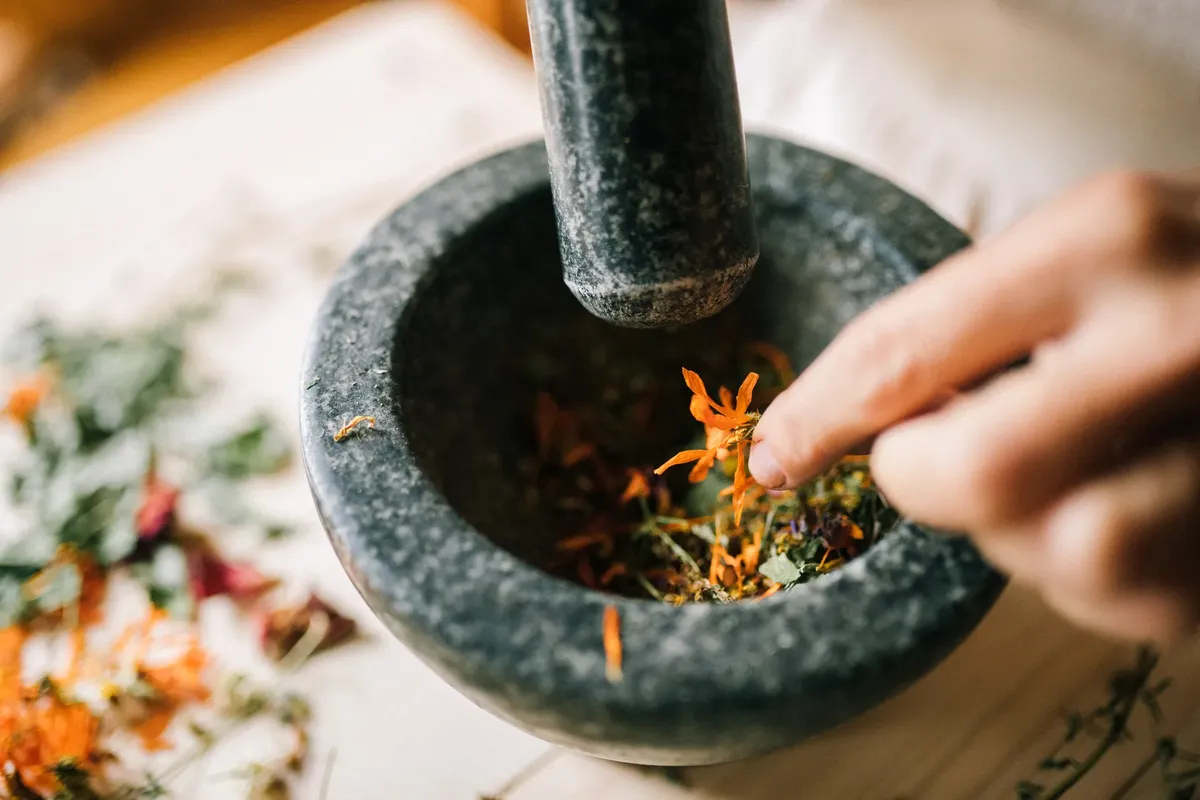
An herbalist carefully weighs seeds in a ceramic bowl, preparing a blend for a local community. This act of bridging the gap between plant remedies then and now requires balancing tradition with evidence.
The scale of traditional medicine's influence is evident in global statistics. It is commonly reported that 80% of people in Asian and African countries rely on traditional medicine for primary health care, though recent studies suggest a lower percentage.
This discrepancy highlights the importance of verifying traditional claims through modern research. Bridging these worlds requires understanding both the cultural significance and the chemical reality of the plants used.
Natural compounds past use often served as the foundation for modern drug discovery. By studying these historical uses, scientists can identify promising leads for new therapeutic agents.
What are the limitations of comparing traditional and modern methods?
A scientist looks through a lens, noting the difficulty of replicating a complex plant extract in a single molecule. This illustrates a limitation: the complexity of natural products can be difficult to capture in modern isolation.
One limitation is that historical usage often lacks the rigorous standardization found in modern medicine, making it difficult to replicate exact results.
| Aspect | Traditional Approach | Modern Application |
|---|---|---|
| Form | Whole plant or decoction | Isolated active compounds |
| Knowledge | Oral tradition and experience | Clinical trials and documentation |
I find that comparing these two worlds requires acknowledging that they often serve different primary goals.
Wikipedia: Natural gas Based on the retained excerpt mentioning IPCC: According to the IPCC Sixth Assessment Report, natural gas consumption grew 15% between 2015 and 2019, compared to a 5% increase in oil and oil product consumption.
- How do we understand natural product traditional use?
- What are the differences in herbal use past vs now?
- How does natural medicine old ways differ from modern applications?
This part also covers Traditional uses of botanicals.
This part also covers Modern medical applications.
This part also covers Bridging ancient and new.
Traditional uses of botanicals
Related
What is the role of history in modern health approaches?
The history of human health provides the foundational knowledge upon which modern applications are sometimes built. The continuity between past practices and current research is a vital thread connecting them.
This connection underscores that the pursuit of wellness has deep roots in human experience.
- The initial reliance on plants shaped early human health practices. 2. Modern science builds upon these ancient observations regarding plant efficacy. 3. This continuity shows a long-term pattern in the history of human health.
How does the context of use influence its acceptance?
The context in which natural remedies are used dictates how they are viewed by practitioners and patients. A shift in setting often mirrors a shift in the approach taken toward healing. This difference affects how well the treatment is received and sustained.
The acceptance of a treatment depends heavily on whether it remains within a localized community setting or enters a globally regulated clinical environment. While the underlying botanical knowledge may persist, the framework surrounding its application undergoes a profound transformation.
This context shapes the patient journey through sickness and recovery.
Disclaimer: This article is general information, not medical advice. Consult a qualified healthcare professional before taking any supplement or medication.




Comments 0